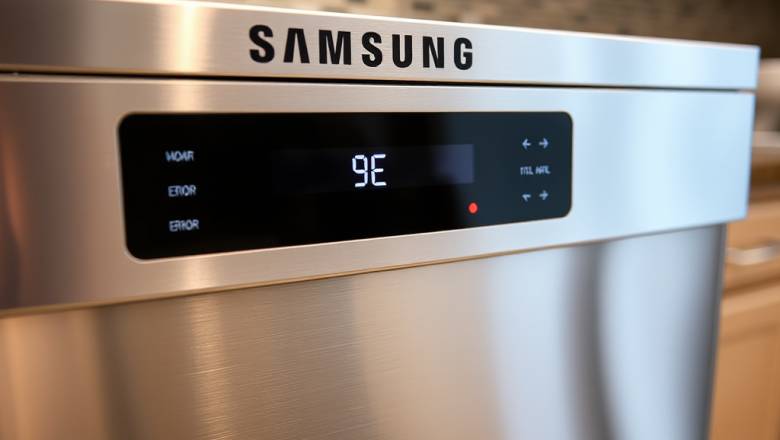
Samsung Dishwasher 9E Error — Causes and Step-by-Step Fix

The Samsung dishwasher 9E error code means the water level sensor cannot confirm proper fill level inside the tub. In 45% of cases, the cause is a kinked or disconnected pressure switch hose — a $3–$5 rubber tube that connects the sensor to the tub. Before replacing anything, verify your water supply valve is fully open and check that you're not using a FloodSafe hose (Samsung advises against them).
What Does the 9E Error Code Mean?
The 9E error code on a Samsung dishwasher indicates a low water level fault. The machine's water level sensor (pressure switch) is reporting that the tub hasn't reached the required fill level after a complete fill cycle, or the sensor itself is sending out-of-range readings to the control board.
Samsung dishwashers require a precise water level to operate the wash arms effectively. When the 9E code appears, the machine will attempt to drain and refill once. If the sensor still doesn't detect adequate water after the second attempt, the cycle aborts and 9E remains on the display.
Pressure switch hose issues cause 45% of 9E errors. Actual low water supply accounts for 30%. Sensor failure is 15%. Control board fault is 10%. Average DIY repair cost: $15–$45.
This code affects Samsung dishwasher models using numeric-letter error systems including DW80R, DW80K, DMT400, DMT800, and DW7933 series. The 9E code is distinct from the 4E (no water fill) code — 9E specifically means water entered the tub but the sensor cannot confirm the correct level. 185
Common Causes of the 9E Error
1. Kinked or Disconnected Pressure Switch Hose
The water level sensor works by measuring air pressure in a small rubber hose connected to the tub. As water rises, pressure increases in the hose, activating the sensor. If this hose is kinked, cracked, or disconnected, the sensor reads zero pressure regardless of actual water level.
Common scenarios:
- The dishwasher was recently moved or installed and the hose got pinched
- Heat degradation caused the hose to crack at connection points
- The hose slipped off its fitting due to vibration
2. Clogged or Dirty Sensor Hose
Detergent residue, food particles, or mineral deposits can accumulate inside the pressure hose over time. A partially blocked hose creates inaccurate pressure readings, causing the sensor to report the wrong water level.
3. Insufficient Water Supply
If your home water pressure is below 20 PSI (Samsung's minimum requirement) or the supply valve isn't fully open, the dishwasher physically cannot fill to the correct level within the allowed time window.
Other supply issues:
- Partially closed shutoff valve under the sink
- Kinked or crushed water supply hose
- Using a FloodSafe hose that has been triggered (these have an internal shutoff that locks permanently)
4. Faulty Water Level Sensor (Pressure Switch)
The pressure switch itself can fail electrically. Internal contacts wear out or the diaphragm that responds to pressure becomes stiff. A defective sensor sends no signal or an erratic signal to the control board.
Samsung dishwasher minimum water pressure requirement: 20 PSI. Optimal operating pressure: 20–120 PSI. Fill time allowed before timeout: approximately 8 minutes.
5. Clogged Inlet Filter or Valve
A clogged inlet screen restricts flow enough that the tub doesn't reach the required level within the fill timer. This overlaps with the 4E code, but in borderline cases (water enters slowly but not fast enough), 9E appears instead.
6. Main Control Board Fault
In approximately 10% of cases, the control board's sensor input circuit is damaged. This typically happens after a power surge. The board cannot read the sensor signal even though the sensor and hose are functioning correctly. 186
How to Fix the 9E Error — Step by Step
Step 1: Power Reset
Turn off the dishwasher at the circuit breaker for 60 seconds, then restore power. If 9E appeared for the first time and doesn't return, it was likely a temporary sensor glitch. If it returns, proceed to Step 2.
Step 2: Verify Water Supply
- Open the shutoff valve under the sink and confirm it's fully turned counterclockwise (fully open)
- Disconnect the supply hose from the dishwasher inlet and place it in a bucket
- Turn the valve on briefly — water should flow freely with good pressure
- If flow is weak, the problem is your home plumbing, not the dishwasher
- Check if you're using a FloodSafe hose (braided stainless with a white connector ring). These auto-lock permanently if triggered — replace with a standard braided hose
Step 3: Clean the Inlet Filter Screen
- Turn off the water supply
- Disconnect the supply hose from the dishwasher inlet (back of the unit, lower left)
- You'll see a fine mesh screen inside the inlet port
- Remove the screen carefully with needle-nose pliers
- Rinse under running water and scrub with an old toothbrush
- Reinstall the screen, reconnect the hose, and tighten
Step 4: Inspect the Pressure Switch Hose
This is the most likely fix for 9E:
- Turn off power at the breaker and shut off water supply
- Pull the dishwasher out from the cabinet (disconnect the drain hose if needed for slack)
- Locate the water level sensor — it's typically mounted on the right side of the tub, connected by a small rubber hose (about 1/4" diameter)
- Trace the hose from the sensor to where it connects to the tub base
- Check for: kinks, cracks, loose connections, or visible buildup inside
- If the hose is disconnected, push it firmly back onto the fitting
- If kinked, straighten it and secure with a zip tie to prevent re-kinking
- If cracked or deteriorated, replace it (generic 1/4" ID rubber tubing works, typically $3–$5 at hardware stores)
- If blocked with residue, disconnect both ends and flush with warm water and white vinegar
Step 5: Test the Water Level Sensor
If the hose is clear and connected properly but 9E persists:
- Disconnect power
- Locate the pressure switch (small round or rectangular component on the tub wall with 2–3 wire connector)
- Disconnect the wire harness from the sensor
- Using a multimeter set to continuity, test across the sensor terminals
- Gently blow into the pressure hose — you should hear a click and the continuity reading should change (switch opens or closes)
- If no click or no change in reading, the sensor is defective
Replacement parts:
- DD61-00236A (common on DW80R/DW80K models) — approximately $25–$40
- DD81-02317A (pressure sensor on newer models) — approximately $30–$45
- DD97-00131A (water level sensor assembly) — approximately $35–$50
Step 6: Replace the Water Level Sensor
- Order the correct part for your model (check the model number sticker on the door frame)
- Disconnect power and pull the dishwasher out
- Disconnect the wire harness from the old sensor
- Remove the mounting screw or release the clip holding the sensor to the tub
- Disconnect the pressure hose from the sensor
- Connect the pressure hose to the new sensor
- Mount the new sensor and reconnect the wire harness
- Push the dishwasher back in, restore power and water
- Run a quick cycle to verify the fix
When to Call a Professional
Contact a Samsung-certified technician if:
- You've verified the supply, cleaned the inlet filter, inspected/replaced the pressure hose, and tested the sensor — but 9E persists. The control board likely needs replacement.
- You notice water leaking from the dishwasher while troubleshooting — don't run the unit until the leak source is identified
- Your model is still under Samsung's standard 1-year warranty or extended protection plan
- The error appeared immediately after a power surge or electrical storm, suggesting board-level damage
Professional repair cost for 9E: $150–$300 depending on the root cause. Control board replacement: $200–$350 total. Service diagnostic fee: $80–$130, typically waived with repair. 188
Estimated Repair Cost
RepairPart CostDIY TotalPro Total
Pressure hose fix/replacement$3–$5$3–$5$100–$150
Inlet filter cleaning$0$0$80–$120
Water supply hose replacement$10–$20$10–$20$100–$150
Water level sensor replacement$25–$50$25–$50$150–$250
Control board replacement$150–$220$150–$220$280–$380
The most common fix (pressure hose repair) costs under $5 and takes 20–30 minutes. Even the worst-case sensor replacement stays under $50 for parts. This is one of the more affordable dishwasher repairs. 189
Preventing the 9E Error
Keep the 9E error from returning:
- Don't use FloodSafe hoses — Samsung explicitly recommends against them as they can trigger false shutoffs. Use a standard braided stainless supply hose instead.
- Clean the inlet filter every 6 months — mineral buildup gradually restricts flow, especially in hard water areas
- Run a cleaning cycle monthly — this helps prevent residue from accumulating in the pressure hose. Use a dishwasher cleaner or 2 cups of white vinegar in an empty hot cycle.
- Verify your water pressure — if you have low pressure throughout the house, consider a booster pump (especially relevant in rural areas with well water)
- Don't run the dishwasher during peak water usage — if someone is showering while the dishwasher fills, reduced pressure can trigger 9E
If you're also seeing the Samsung dishwasher 4C error, the root cause overlaps significantly — check our guide for additional water supply diagnostics. 190