LG Dryer D80 Error Code — Causes and Step-by-Step Fix
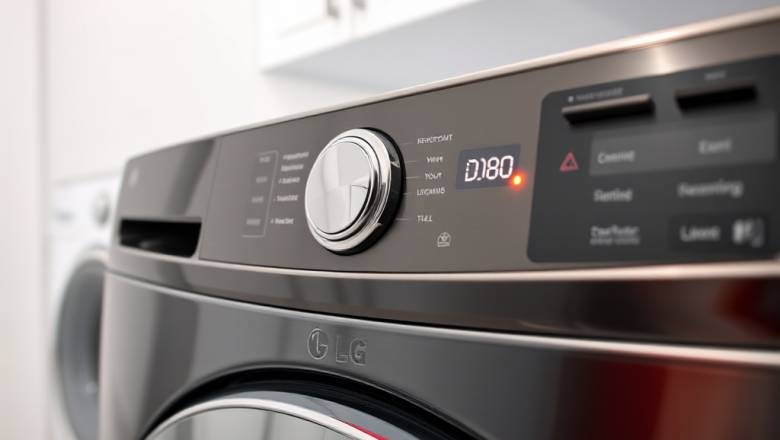

The LG dryer D80 error code means your exhaust vent system is approximately 80% blocked, severely restricting airflow. The most common cause is accumulated lint inside the dryer vent duct (responsible for roughly 70% of cases). This is a safety-critical warning: the NFPA reports that clogged dryer vents cause approximately 15,500 house fires annually in the United States. Stop using the dryer, disconnect the vent hose, and clean the entire duct run from the dryer to the exterior wall cap.
What Does the D80 Error Code Mean on an LG Dryer?
The D80 code on your LG dryer indicates that the Flow Sense system has detected approximately 80% airflow restriction in the exhaust duct system. LG dryers use a thermal differential sensor to measure how quickly hot air exits the drum — when air velocity drops below a programmed threshold, the system triggers the D80 warning after the cycle completes.
Airflow restriction level: 80%. Related codes: D90 (90% blocked), D95 (95% blocked). The National Fire Protection Association (NFPA) reports approximately 15,500 U.S. house fires per year are caused by dryer vent blockages, resulting in $238 million in property damage annually.
This is not a component failure — it is an airflow restriction warning. The dryer itself is functioning correctly, but the exhaust path is dangerously obstructed. Unlike most error codes that indicate a broken part, D80 tells you the installation environment has become unsafe. You can still run the dryer with this code displayed, but doing so increases the risk of overheating, extended dry times, premature component wear, and in worst cases, a house fire.
LG's Flow Sense system uses a scale from D75 (mild restriction) through D80, D90, to D95 (near-total blockage). If you are seeing D80, the problem has progressed beyond a minor inconvenience — it requires immediate attention before it escalates to D90 or D95 territory. 161
Common Causes of the LG Dryer D80 Error
1. Lint Accumulation in the Vent Duct (70% of cases)
The lint trap inside your dryer only captures about 75% of lint generated during a drying cycle. The remaining 25% passes through and gradually accumulates inside the vent duct, flexible transition hose, and exterior vent cap. Over 12-18 months of regular use, this buildup can restrict airflow by 80% or more.
2. Crushed or Kinked Transition Hose (15% of cases)
The short flexible hose connecting your dryer to the wall duct is vulnerable to crushing when the dryer is pushed too close to the wall. Even a partial kink reduces the effective diameter significantly. A 4-inch duct reduced to 2 inches loses approximately 75% of its airflow capacity.
3. Exterior Vent Cap Obstruction (10% of cases)
Bird nests, wasp hives, snow accumulation, or a stuck flap on the exterior vent cap can block the exhaust exit point. Many homeowners never inspect this component because it is mounted high on an exterior wall or on the roof.
4. Excessively Long or Poorly Routed Ductwork (5% of cases)
The International Residential Code limits dryer vent runs to 35 feet maximum, with each 90-degree elbow reducing that limit by 5 feet. Installations exceeding these limits create inherent airflow problems that cleaning alone cannot solve.
Maximum recommended vent length: 35 feet (per IRC M1502.4.6.1). Each 90-degree elbow subtracts 5 feet. Each 45-degree elbow subtracts 2.5 feet. Minimum duct diameter: 4 inches rigid metal. 162
How to Fix the LG Dryer D80 Error — Step by Step
Tools and Materials Needed
- Screwdriver (for hose clamps)
- Dryer vent cleaning brush kit (flexible rods, 12+ feet)
- Vacuum with hose attachment
- Leaf blower (optional, for long duct runs)
- Replacement aluminum foil tape (not duct tape)
Step 1: Disconnect and Inspect the Transition Hose (5 minutes)
Unplug the dryer from the electrical outlet. Pull the dryer away from the wall carefully. Loosen the hose clamp connecting the flexible transition hose to both the dryer exhaust port and the wall duct opening. Remove the hose and inspect it: look for lint accumulation, crushed sections, or damage. If using a vinyl or foil-type hose, replace it with a semi-rigid or rigid aluminum hose — vinyl hoses are a fire hazard and are prohibited by most building codes.
Step 2: Clean the Dryer Internal Exhaust Path (10 minutes)
With the transition hose removed, look inside the dryer exhaust port using a flashlight. Use a vacuum hose attachment to remove any visible lint. On many LG models, the internal duct path runs from the lint trap housing down to the rear exhaust port — lint accumulates at each bend point.
Step 3: Clean the Wall Duct from Inside (15-30 minutes)
Insert the vent cleaning brush into the wall duct opening. Rotate the brush while pushing it through the entire duct run. Work in sections, pulling the brush back every 3-4 feet to remove captured lint. For runs longer than 12 feet, consider using a leaf blower: seal the blower nozzle into the duct opening and run it for 30 seconds while someone verifies airflow at the exterior cap.
Step 4: Inspect and Clean the Exterior Vent Cap (5 minutes)
Go outside and locate where the vent exits your home. Remove the vent cap cover and clear any lint, debris, or obstructions. Verify the flap moves freely — a stuck flap is a common hidden cause of the D80 code. Replace the cap if the flap spring is broken or if bird screen mesh is clogged.
Step 5: Reassemble and Test (5 minutes)
Reconnect the transition hose using proper clamps (not screws — screws catch lint). Push the dryer back, leaving at least 4 inches of clearance behind it to prevent hose crushing. Run a high-heat timed dry cycle for 10 minutes and verify strong airflow at the exterior cap. The D80 code should not reappear on the next full cycle. 163
When the D80 Code Appears but the Vent Seems Clear
In approximately 15% of D80 cases, homeowners clean the vent and the code persists. This happens when:
- The duct run exceeds code limits — If your total duct length (accounting for elbow deductions) exceeds 35 feet, even a clean duct may not provide adequate airflow. The solution is to shorten the run, reduce elbows, or install a dryer vent booster fan (approximately $80-$150).
- The rigid duct has interior ridges — Flexible foil duct with corrugated interior surfaces creates turbulence that reduces effective airflow by 20-30% compared to smooth-wall rigid metal duct.
- The Flow Sense sensor is contaminated — The thermistor that measures exhaust temperature can accumulate lint or moisture, giving false readings. It is located near the exhaust port on the rear panel. Cleaning it with compressed air resolves false D80 alerts.
If the code persists after all cleaning and verification steps, run a diagnostic test: disconnect the transition hose entirely, leaving the exhaust port open to the room. Run a 5-minute timed cycle. If the D80 code still appears with no duct attached at all, the Flow Sense sensor or control board may need replacement (LG part number: ABA74250201 for the thermistor assembly, approximately $25-$40).
Average DIY fix cost: $0-$30 (cleaning supplies). Vent booster fan: $80-$150 installed. Flow Sense thermistor replacement: $25-$40 for the part. Professional vent cleaning service: $100-$200. 164
Preventing the D80 Error from Recurring
The D80 code is preventable with basic maintenance:
- Clean the lint trap before every load — This is non-negotiable. A clogged lint screen forces more lint into the duct system.
- Deep-clean the vent duct annually — Mark your calendar. Once per year, disconnect the hose and brush out the full duct run.
- Inspect the exterior cap seasonally — Check that the flap opens freely and nothing is nesting inside.
- Never use vinyl transition hoses — Use only semi-rigid aluminum or rigid metal duct. Vinyl traps lint in its ridges and melts under high heat.
- Maintain 4+ inches of clearance behind the dryer — This prevents the transition hose from kinking.
- Wash the lint screen with soap and water monthly — Dryer sheets leave an invisible film on the mesh that reduces airflow by up to 25%.
Following these practices, most households will never see a D80 code again. If your installation has inherently long or complex ductwork, consider a permanent vent booster fan — it actively assists airflow and eliminates restriction-related codes entirely. 165
When to Call a Professional
Handle the D80 code yourself if you can physically access both ends of the vent duct and the total run is under 20 feet. Call a professional when:
- The vent runs through walls, ceilings, or the attic and you cannot reach it with a standard brush kit
- The duct run exceeds 25 feet with multiple elbows
- You suspect the duct is disconnected inside a wall (warm, humid laundry room despite the dryer running)
- The D80 code persists after thorough cleaning (possible sensor or board issue)
- You smell burning during a dry cycle — stop the dryer immediately and call a technician
A professional dryer vent cleaning typically costs $100-$200 and includes inspection with a camera scope for disconnected joints or crushed sections hidden inside walls. For duct replacement or rerouting, expect $200-$500 depending on accessibility and length. 166