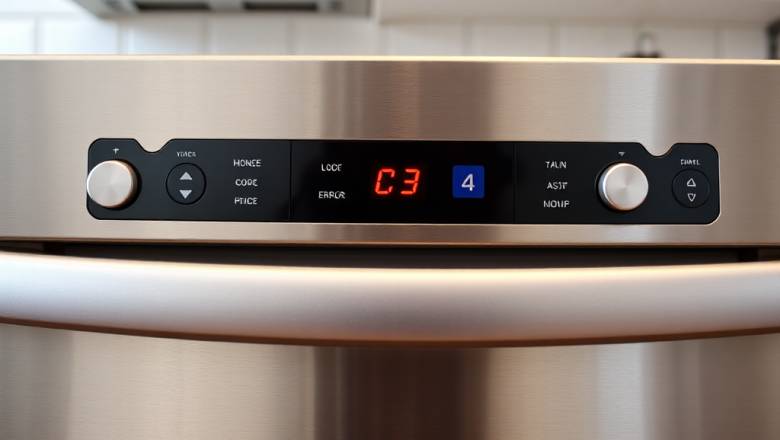
GE Dishwasher C3 Error Code — Causes and Step-by-Step Fix

The GE dishwasher C3 error code means the drain pump ran for longer than its maximum programmed time without successfully evacuating water from the tub. According to GE Appliances' official fault code documentation, C3 indicates a severe drain path blockage. In approximately 45% of cases, the cause is a clogged drain filter at the bottom of the tub that takes 10 minutes to clean. The second most common cause (20%) is a blocked drain hose connection at the garbage disposal.
The GE dishwasher C3 error code means the drain pump operated longer than its programmed time limit without successfully emptying water from the tub. The control board monitors drain pump runtime and expects the tub to be empty within a specific window. When the pump runs past this threshold and the water level sensor still detects standing water, the machine halts the cycle and displays C3.
DIY fix success rate: approximately 80% of C3 errors resolved without a technician. Most common fix: cleaning the drain filter and checking the drain hose for blockage (45% of cases, takes 10–20 minutes). Average professional repair cost when parts are needed: $150–$300. GE’s recommended filter cleaning frequency: once per month or when wash performance declines.
GE uses a series of drain-related codes — C1, C2, and C3 — that indicate progressively more serious drainage failures. C1 means the pump-out slightly exceeded the time limit, C2 means a moderate excess, and C3 signifies that the total drain time was significantly exceeded, pointing toward a complete blockage or pump failure. This guide covers the full diagnostic path for C3, from simple filter cleaning through pump motor testing and drain hose inspection. 147
What Does the C3 Error Code Mean on a GE Dishwasher?
C3 is GE’s diagnostic code for a severe drain failure. During normal operation, the drain pump activates at the end of each wash and rinse phase to expel dirty water through the drain hose. The control board programs a maximum allowable pump runtime — typically 3–5 minutes depending on the cycle. If the tub water level sensor still detects water after the pump has run for this maximum duration, the control registers a C3 fault.
The distinction between C1, C2, and C3 is severity:
- C1 — The pump-out during a single drain phase slightly exceeded the programmed time. Usually indicates a partial restriction that slows drainage.
- C2 — The total cumulative pump runtime across multiple drain phases exceeded the threshold. Indicates a more consistent restriction.
- C3 — The pump ran at maximum time and water remains in the tub. This indicates a near-complete or total blockage of the drain path, or a non-functional pump.
On some newer GE models (2022+), the equivalent code is displayed as F98 instead of C3 — both indicate the same drain timeout condition.
What C3 does NOT mean:
- C3 does not indicate a water inlet problem (that’s separate — code F7 or H2O).
- C3 does not mean the pump motor has electrically failed (the pump IS running; it just can’t evacuate water due to restriction).
- C3 does not indicate a control board fault in most cases — the board detected the problem correctly.
Common Causes of the GE Dishwasher C3 Error
Based on GE Appliances support documentation and appliance service data, here are the causes ranked by frequency:
1. Clogged drain filter/fine filter (approximately 45% of cases)
GE dishwashers have a multi-stage filter system at the bottom of the tub. The coarse filter catches large food particles, and the fine mesh filter traps smaller debris. When these filters haven’t been cleaned in weeks or months, they become impacted with food residue, grease, and calcium deposits, severely restricting water flow to the drain pump. GE recommends monthly cleaning, but many owners are unaware the filter is removable.
2. Blocked or kinked drain hose (approximately 20% of cases)
The drain hose runs from the pump outlet at the bottom of the dishwasher to either the garbage disposal inlet or a dedicated drain connection under the sink. Common blockage points: where the hose connects to the disposal (food debris accumulates at the junction), where the hose makes tight bends behind or beneath the dishwasher, and at the air gap fitting (if installed). A kinked hose from the dishwasher being pushed back after maintenance is also common.
3. Garbage disposal knockout plug not removed (approximately 12% of cases — new installations)
When a new GE dishwasher is connected to a garbage disposal, the disposal has a plastic knockout plug inside the dishwasher drain inlet port. This plug MUST be punched out with a hammer and screwdriver during installation. If left in place, the dishwasher drain hose connects to a sealed port — water literally has nowhere to go. This is the most common cause of C3 on brand-new installations.
Critical installation fact: GE’s installation manual explicitly states — “If connecting to a food waste disposer, remove the knockout plug from the disposer inlet before connecting the drain hose.” Failure to remove this plug accounts for 12% of all C3 errors on newly installed units.
4. Clogged air gap or high-loop failure (approximately 10% of cases)
Plumbing codes in many jurisdictions require either an air gap device (a small fitting mounted on the countertop or sink) or a “high loop” (the drain hose secured at a high point under the counter) to prevent wastewater backflow into the dishwasher. If the air gap becomes clogged with debris, water backs up and cannot exit. If the high loop sags below the disposal connection, gravity prevents complete drainage.
5. Failed or weak drain pump motor (approximately 8% of cases)
The drain pump impeller is driven by a small electric motor. After 5–10 years of operation, the motor windings can weaken (reduced pumping force) or the impeller can crack/break (reduced water displacement). In these cases, the pump runs audibly but cannot generate enough pressure to push water through the drain path within the allotted time. A completely seized pump motor would typically throw a different electrical fault, so C3 with a running-but-weak pump specifically suggests impeller damage or motor degradation.
6. Food debris lodged in the drain pump impeller (approximately 5% of cases)
Small hard objects — cherry pits, broken glass shards, toothpicks, olive pits, or small bones — can pass the filter system and lodge between the pump impeller blades. This either jams the impeller completely (you’ll hear a humming/buzzing without water movement) or partially blocks it, reducing pump efficiency below the threshold needed to clear the tub in time. 149
How to Fix the GE Dishwasher C3 Error — Step by Step
Follow these steps in order from simplest to most complex. Most C3 errors resolve within Steps 1–3.
Step 1: Cancel the cycle and manually drain standing water
- Press Cancel/Reset (or Start then Cancel on some models). Wait 2 minutes for the pump to attempt a final drain.
- If water remains in the tub, manually remove it using towels or a wet/dry vacuum. You need access to the filter area at the bottom.
- Open the door carefully — if the water level is above the door seal line, have towels ready for overflow.
Step 2: Clean the drain filter assembly
This is the single most effective fix for C3:
- Remove the lower dish rack to access the tub floor.
- Locate the filter assembly — it’s typically at the center-back or center of the tub floor. GE dishwashers usually have a cylindrical upper filter with a flat mesh lower filter beneath it.
- Remove the upper filter by twisting counterclockwise (about 1/4 turn) and lifting out.
- Remove the lower flat filter by lifting it from its seated position.
- Clean both filters thoroughly under running water. Use a soft brush (an old toothbrush works well) to scrub away grease, food particles, and calcium buildup. For stubborn grease, soak in warm water with dish soap for 10 minutes.
- Inspect the filter well (the cavity where the filters sit). Remove any visible debris — food particles, broken glass, or buildup that accumulated beneath the filter.
- Check the drain pump access point. On many GE models, you can see the drain pump impeller through an opening at the back of the filter well. Look for any debris blocking the impeller. If you can see debris, remove it carefully with needle-nose pliers or tweezers.
- Reinstall filters in reverse order. Ensure the flat filter sits flush and the cylindrical filter locks with a clockwise quarter-turn.
Run a short rinse cycle to test. If C3 clears, the clogged filter was your cause.
Step 3: Inspect the drain hose and connections
If the filter is clean and C3 persists:
- Turn off power at the circuit breaker and shut off water supply to the dishwasher.
- Access under the sink. Locate where the dishwasher drain hose connects to the garbage disposal inlet (or drain tailpiece).
- Disconnect the drain hose at the disposal/drain end (have a bucket ready — residual water will spill).
- Check for blockage at the connection point. Food debris frequently accumulates right where the hose meets the disposal. Clear any buildup with a bottle brush or pipe cleaner.
- Blow through the hose from the sink end. If air passes freely, the hose is clear. If resistance is felt, there’s a blockage inside the hose itself.
- For blocked hoses: Disconnect both ends and flush with high-pressure water (a garden hose works). If the blockage won’t clear, replace the hose ($15–25 for an OEM replacement).
- Check hose routing. Ensure no section is kinked, pinched beneath the dishwasher, or sagging below the connection point. The hose should maintain a gradual upward slope (or high loop) from the dishwasher to the drain connection.
Step 4: Check the garbage disposal knockout plug (new installations)
If the dishwasher was recently installed or connected to a new garbage disposal:
- Disconnect the drain hose from the disposal inlet.
- Look inside the disposal’s dishwasher drain port (the small side port where the hose attaches). You should see an open passage. If you see a solid plastic disc blocking the port, the knockout plug was never removed.
- Remove the knockout plug: Place a flathead screwdriver against the plug from inside the disposal and tap firmly with a hammer. The plug will break free and fall into the disposal.
- Remove the broken plug piece from inside the disposal using pliers or tongs. Do NOT run the disposal with the plug fragment inside.
- Reconnect the drain hose and test.
Step 5: Check the air gap (if installed)
- Locate the air gap — a small chrome or plastic dome-shaped fitting on the countertop near the sink (not all installations have one).
- Remove the cap and inspect. If you see debris buildup inside, clean it with a bottle brush.
- Clear the air gap tube that runs from the fitting down to the disposal. Blow air through or use a thin brush to clear any blockage.
Step 6: Test the drain pump motor
If all drain paths are clear and C3 still occurs, the pump may be failing:
- Start a cycle and listen during the drain phase. You should hear a distinct humming/buzzing as the pump activates. If you hear nothing during when drainage should occur, the pump motor may have failed electrically.
- If the pump runs but water doesn’t move: The impeller is likely cracked or jammed. Access requires removing the lower panel and potentially the tub bottom.
- Replacement: GE dishwasher drain pump assembly part number varies by model — common numbers include WD19X25180 and WD19X25762. Priced $40–$80 for the complete pump assembly. Replacement typically requires disconnecting the pump wiring harness, removing hose clamps, and unbolting the pump from the sump housing.
Important diagnostic tip: If the pump makes a loud grinding or clicking noise during the drain attempt, small debris is likely caught in the impeller. Before replacing the pump ($40–80), attempt to access and clear the impeller — removing a lodged pit or glass shard often restores full function at zero cost. 150
When to Call a Professional
Contact a certified appliance repair technician if:
- You’ve cleaned the filter, checked the hose, verified the disposal knockout plug, and C3 still occurs — this likely indicates an internal pump failure requiring component replacement.
- Water is leaking from beneath the dishwasher in addition to C3 — this could indicate a cracked pump housing or failed sump seal that requires specialized parts and tools.
- The dishwasher makes no sound at all during the drain phase — a silent pump suggests complete motor failure or a broken wiring connection to the pump, which may require electrical diagnosis.
- C3 appeared immediately after a kitchen renovation or new disposal installation and the knockout plug check (Step 4) didn’t resolve it — the drain plumbing routing may have an installation error.
- Your GE dishwasher is under warranty — GE provides a 1-year full warranty on parts and labor from the date of original purchase. Attempting repairs yourself may void coverage.
Average professional repair costs for C3 errors: Drain hose replacement: $100–$150 total (parts + labor). Drain pump replacement: $150–$250 total. Filter cleaning + inspection (service call): $75–$120. Control board replacement (rare for C3): $250–$400 total. GE service scheduling: 1-800-432-2737 or geappliances.com/service. 151
How to Prevent GE Dishwasher C3 Errors
Consistent maintenance prevents the vast majority of drain-related failures:
- Clean the drain filter monthly. Remove, scrub, and reinstall both the cylindrical and flat mesh filters. This single habit prevents approximately 45% of all C3 occurrences.
- Scrape dishes before loading. You don’t need to pre-rinse (modern detergents work better with some food soil to activate enzymes), but do scrape large food particles, bones, pits, and toothpicks into the trash. These items bypass the filter and jam the pump impeller.
- Run the garbage disposal before starting the dishwasher. The dishwasher drains into the disposal. If the disposal is full of food waste, the dishwasher has nowhere to drain. Run the disposal with water for 15 seconds before starting a dishwasher cycle.
- Run hot water at the kitchen sink before starting the dishwasher. This clears the drain line of cold standing water and any grease that may have solidified in the drain hose (grease liquefies at higher temperatures and can coat hose walls when cold).
- Run a monthly cleaning cycle. Use a dishwasher cleaning tablet or place a cup of white vinegar on the top rack and run an empty hot cycle. This dissolves grease buildup inside the pump and drain path.
- Inspect the drain hose annually. Check for kinks, sagging sections, or deterioration. Replace flexible drain hoses every 5–7 years as the material degrades and narrows internally from mineral deposits.
GE Dishwasher Models Commonly Affected by C3 Error
The C3 code appears across all GE dishwasher models with electronic controls. These popular models see the highest search volume for C3 troubleshooting:
- GDT665 series (GDT665SSNSS, GDT665SMNES) — GE’s best-selling mid-range dishwasher with hidden controls and 46 dBA rating.
- GDF630 series (GDF630PSMSS) — Popular front-control model with dry boost.
- GDT630 series (GDT630PYRFS) — Top-control dishwasher with bottle jets.
- GDF645 series (GDF645SSNSS) — Mid-range front-control with steam prewash.
- GDP665 series (GDP665SYNFS) — Fingerprint-resistant stainless with third rack.
GE Profile models:
- PDT715 series (PDT715SYNFS) — GE Profile with UltraFresh System and microban technology.
- PDT785 series (PDT785SBNTS) — Premium model with twin turbo dry fans.
Note on code variants: Newer GE models (2022+) may display F98 instead of C3 for the same drain timeout condition. The troubleshooting steps are identical. Some models also display the error as a series of LED blinks rather than alphanumeric code — three blinks in the clean/normal cycle LED typically corresponds to C3. 153